

What is fueling Dubai’s economic momentum through DIEZ’s 2025 performance?
Free zones attract firms as workforce growth accelerates
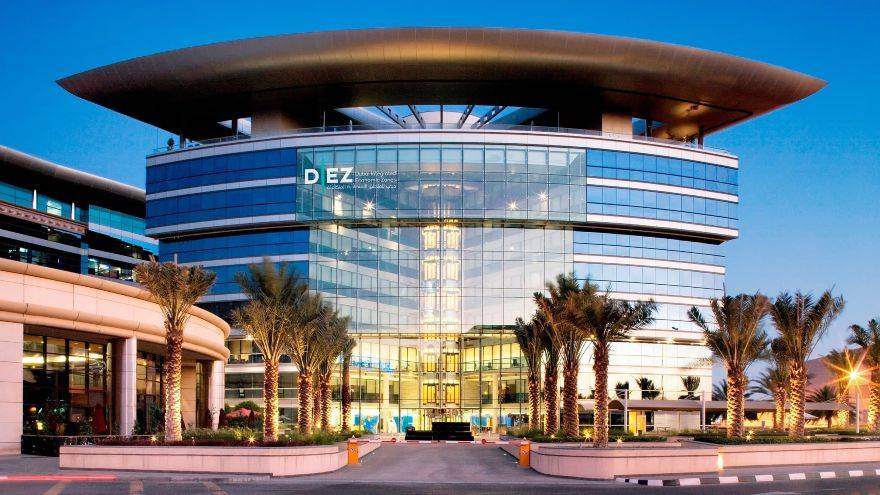
DUBAI – Dubai’s economic diversification ambitions gained fresh momentum after the Dubai Integrated Economic Zones Authority (DIEZ) reported strong 2025 results, highlighting growth across revenue, profitability, company registrations and employment, while major investments across innovation-led developments added another layer to the emirate’s long-term competitiveness strategy.
The authority reported revenue growth of 19.4% and a 17.8% rise in net profit compared with 2024, figures that underscore continued expansion across its integrated economic ecosystem. The results also pointed to broader momentum in trade, technology and investment activity linked to Dubai’s three major economic zones: Dubai Airport Free Zone, Dubai Silicon Oasis and Dubai CommerCity.
The numbers extended beyond financial performance. Companies registered within the DIEZ ecosystem climbed 24.6% by the end of 2025, while the total workforce operating across its zones rose 26.2% to 106,359 employees. Those figures offered a snapshot of expanding commercial activity, rising investor confidence and a labour market supported by sustained business growth. Against the backdrop of the Dubai Economic Agenda D33, which aims to position the emirate among the world’s top three urban economies within a decade, the results placed DIEZ at the centre of wider economic ambitions.
Growth drivers
The financial gains reported by DIEZ were linked to a mix of operational efficiency improvements and the rising appeal of its free zone model, which combines infrastructure, regulatory support and sector-focused ecosystems. Officials described the operating model as resilient, supported by growing demand from companies seeking regional expansion platforms and access to smart business services.
Dubai Integrated Economic Zones Authority has increasingly positioned its three economic zones as specialised hubs serving logistics, technology, e-commerce and advanced industries. Dubai Airport Free Zone has long served as a gateway for trade and aviation-linked industries, while Dubai Silicon Oasis has strengthened its profile as a technology and innovation district. Dubai CommerCity, focused on digital commerce, has also gained prominence as global supply chains and online trade continue to evolve.
Sheikh Ahmed bin Saeed Al Maktoum said the performance reinforced DIEZ’s contribution to trade and investment competitiveness, while aligning with Dubai’s strategy for sustainable growth and economic diversification. He also linked the results to efforts to expand innovation, digital transformation and value creation in priority sectors, all of which feed into broader D33 targets.
The increase in company registrations and employment also pointed to growing demand from firms seeking to establish or expand in Dubai’s economic zones. For investors, the combination of infrastructure, smart solutions and proximity to regional markets has remained a key attraction. For policymakers, those indicators serve as measures of economic depth beyond headline financial performance.
Expansion plans
A major element of DIEZ’s 2025 narrative centred on expansion projects launched at Dubai Silicon Oasis, with total investments of Dh12.8 billion. At the heart of those plans are District IO and Block 14, two developments designed to support future industries while contributing to urban and economic growth.
District IO alone accounts for Dh11 billion in investment and is expected to play a substantial role in Dubai’s innovation ecosystem. The project is projected to generate more than 70,000 direct and indirect jobs over the next decade, contribute up to Dh103 billion to Dubai’s GDP and attract foreign direct investment of up to Dh30 billion by 2036.
The scale of the development reflects Dubai’s emphasis on future-focused industries. District IO is expected to accommodate more than 6,500 global companies, including startups and SMEs operating across sectors such as smart mobility, 3D printing, robotics, X-Tech, artificial intelligence, quantum computing and Web3 technologies. The breadth of sectors targeted also signals how Dubai is aligning industrial development with emerging technology trends shaping global markets.
Block 14, backed by Dh1.8 billion in first-phase investment, adds a different dimension to the expansion strategy. Positioned near the planned Dubai Metro Blue Line station at Dubai Silicon Oasis, the project combines commercial, residential and retail components under transit-oriented development principles linked to the Dubai 2040 Urban Master Plan. That places infrastructure and urban planning alongside economic zone expansion, rather than treating them as separate tracks.
The emphasis on connectivity has also become increasingly relevant as Dubai pushes to integrate transport, commercial development and innovation districts. By linking economic zone growth to broader urban development, projects such as Block 14 reflect a more layered strategy than traditional free zone expansion models.
Strategic links
Beyond infrastructure, 2025 also brought strategic milestones tied to research, education and corporate partnerships. One of the most significant involved the approval of the second phase expansion of the Rochester Institute of Technology Dubai campus at Dubai Silicon Oasis, with investment exceeding Dh313 million.
The project will take the total built-up area beyond 124,000 square metres, marking a 217% increase. It is expected to expand capacity to roughly 4,500 students, supported by nine new academic and administrative buildings and enhanced research infrastructure. For Dubai’s wider innovation agenda, the move strengthens efforts to connect higher education, research and commercial ecosystems.
The education expansion also sits within a broader pattern of integrating talent development into economic planning. Rather than viewing academic institutions purely as educational assets, Dubai has increasingly positioned them as contributors to research commercialisation, innovation and workforce development.
Corporate partnerships formed another key part of the picture. Schneider Electric launched a Dh100 million talent development initiative in 2025, alongside the inauguration of its regional headquarters, The Nest, in Dubai Silicon Oasis. The facility marked the first of its kind under the company’s global Impact Buildings programme, adding an international corporate dimension to the zone’s development trajectory.
Such partnerships are often viewed as indicators of confidence from global firms, particularly when linked to regional headquarters or long-term skills investment. They also complement the broader growth in company registrations reported by DIEZ, adding depth to headline business expansion figures.
Economic impact
The significance of the 2025 results lies partly in the scale of growth figures, but also in how they connect multiple strands of Dubai’s economic strategy. Revenue rose 19.4%. Net profit increased 17.8%. Company numbers climbed 24.6%. Employment reached 106,359, up 26.2%. Yet the broader picture also includes billions in infrastructure investment, projected GDP contributions, job creation targets and institutional partnerships.
That multi-layered approach has become increasingly central to Dubai’s economic positioning. Rather than relying solely on traditional trade advantages, the focus has shifted towards combining logistics, technology, research, urban development and foreign investment attraction within integrated ecosystems.
DIEZ’s results also arrived as global markets continue to navigate shifting supply chains, changing trade routes and accelerating technology transitions. Against that backdrop, the authority’s emphasis on adaptive growth, financial sustainability and sector diversification aligned with broader themes shaping international investment decisions.
Officials also highlighted continued plans to strengthen smart services, streamline the customer journey and deepen integration across economic zones. Those measures form part of a wider push to improve business efficiency while supporting companies looking to scale operations regionally and globally.
The scale of District IO alone has added weight to long-term projections surrounding Dubai’s innovation economy. With up to Dh103 billion in projected GDP contribution and Dh30 billion in potential foreign direct investment by 2036, the development has emerged as one of the most closely watched components of DIEZ’s future growth story.